A pressure gauge failure rarely announces itself. The pointer starts to wander a little, the reading drifts a few percent away from the transmitter mounted beside it, and somewhere between month three and month eighteen someone unscrews the instrument and drops it in the bin. Across refineries, desalination plants, district cooling schemes and pumping stations in Saudi Arabia and the UAE, this happens far more often than the instrument’s design life suggests — and in most cases the gauge itself was never the problem. It was specified for a set of conditions it was never going to meet.
This piece looks at the four failure mechanisms that account for most repeat replacements on Middle East sites, what each one physically does to the instrument, and what is worth checking before you raise the next purchase request.
1. Pulsation: the failure that starts at the pump discharge
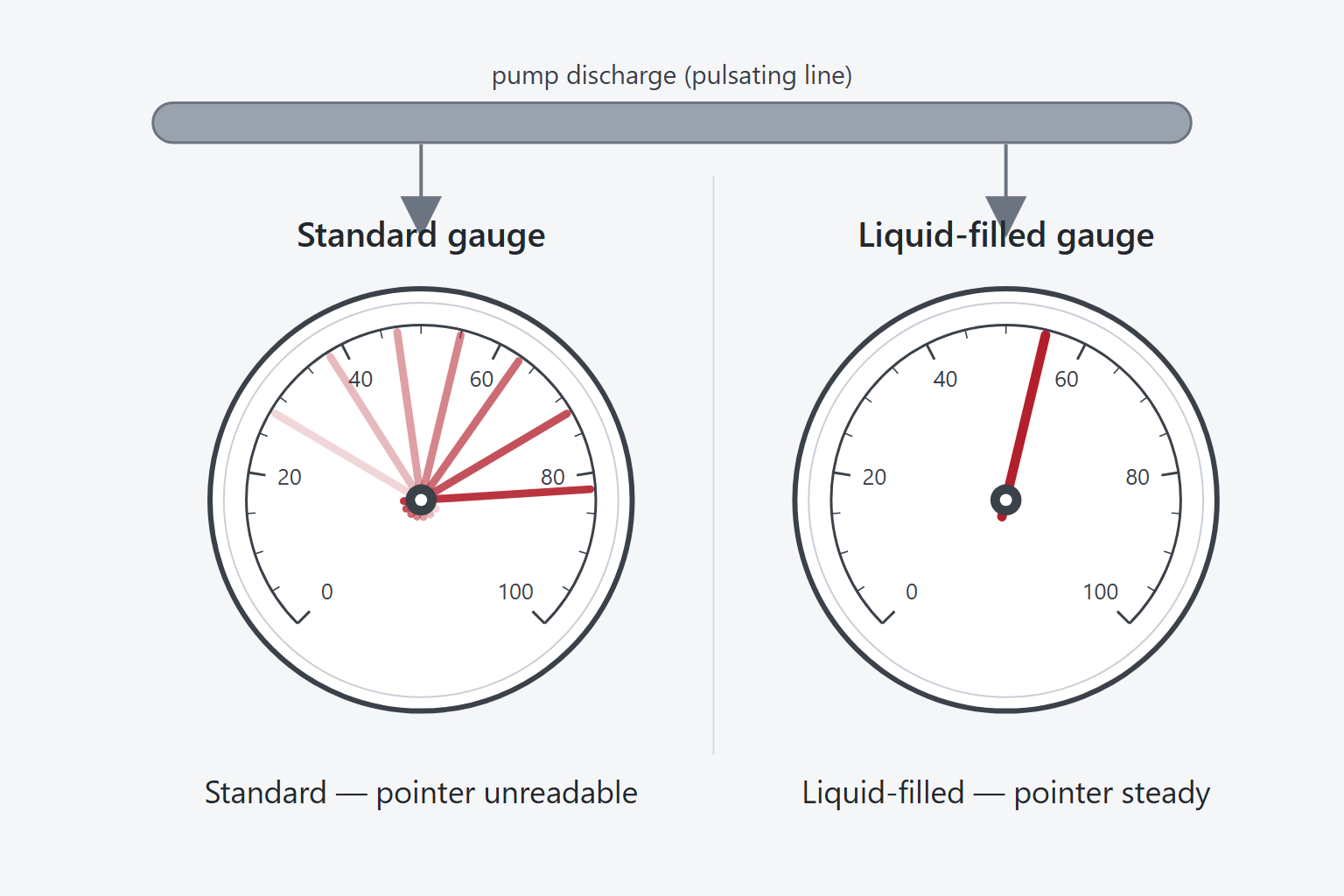
A Bourdon tube gauge reads pressure by straightening very slightly as pressure rises inside it. That movement is small, elastic and repeatable — which is exactly why the design works, and exactly why it does not survive pulsation.
Pump discharge lines, reciprocating compressors, and any line downstream of a fast-acting valve do not hold a steady pressure. They cycle, hundreds of times a minute. Every cycle flexes the Bourdon tube a little, and every flex adds to a fatigue count nobody specified for. Two consequences arrive together.
The first is operational: the pointer oscillates until nobody can read it. Operators take a guess, write down a number, and that number goes into a log that somebody later uses to make a decision. The second is physical: the tube work-hardens and eventually cracks. A cracked Bourdon tube inside a sealed case is not a nuisance — it is a process leak waiting for a reason to open up.
The correction here is not simply a heavier gauge. It is damping. That usually means one of two things, and in severe cases both: a vibration-resistant pressure gauge with liquid filling, which damps the movement hydraulically at the pointer, or an external snubber between process and instrument, which damps the pressure pulse before it ever reaches the tube.
What to check: is there a reciprocating machine or a fast-cycling valve upstream of every point where you have had repeat failures? If yes, damping belongs in the specification, not in the maintenance budget.
2. Heat: what a Gulf summer does to a liquid-filled gauge
Liquid filling solves the pulsation problem and then quietly introduces another one. A filled gauge carries silicone oil or glycerin behind the dial. That fluid damps the pointer beautifully — and, like every fluid, it expands when it gets hot.
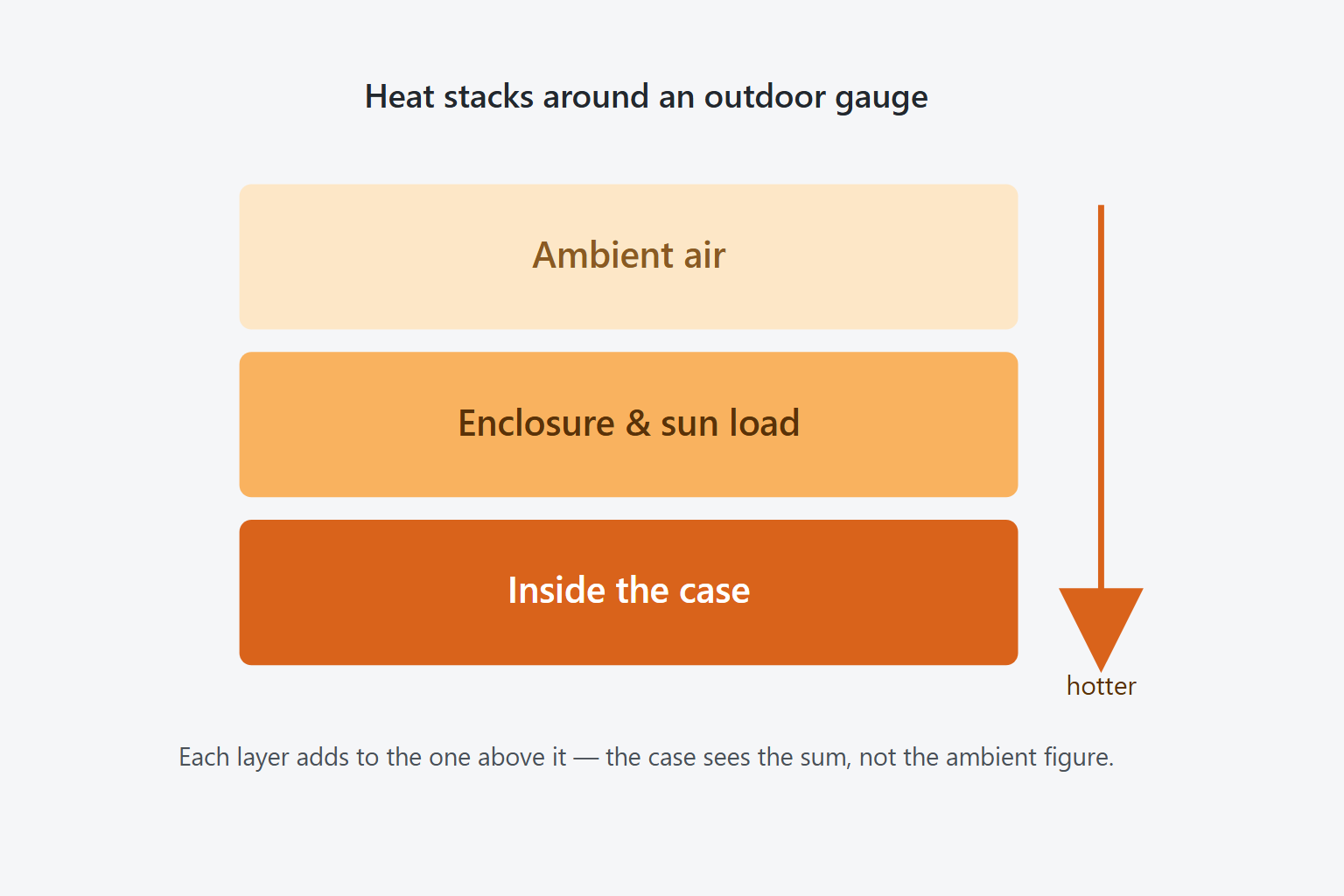
Across much of the Gulf, ambient temperature sits in the 40s °C for months at a time. Add direct sun on a skid-mounted panel, or a sealed enclosure with no ventilation, and the temperature immediately around the case can run well above ambient. When the fill expands and has nowhere to go, three outcomes follow, in increasing order of expense:
- Reading drift. Case pressure rises and shifts pointer position relative to true process pressure. The error is usually small at first, which is exactly why it survives months undetected.
- Fogging or weeping at the window. The operator loses the dial before the instrument actually fails, which means it gets replaced early on appearance rather than performance.
- Loss of fill. The case seal gives, the oil goes, and the instrument has quietly reverted to a dry gauge with none of the damping you paid for. It now sits on the same pulsating line that killed the last dry gauge.
None of this is an argument against filled gauges — they remain standard practice for pulsation and vibration duty. It is an argument for matching the fill and the case construction to the temperature the instrument will actually see, and for treating shade or relocation as a legitimate part of the specification.
What to check: where do your failed filled gauges sit — shaded or in sun, ventilated enclosure or sealed box? If the failures cluster in the sunny locations, you have your answer.
3. Chloride: when 316L stops being the upgrade and becomes the requirement
Brass is a sensible wetted material for a great deal of general service work — water, air, non-corrosive liquids — and it costs less. It also has a well-known limit, and that limit is chlorides.
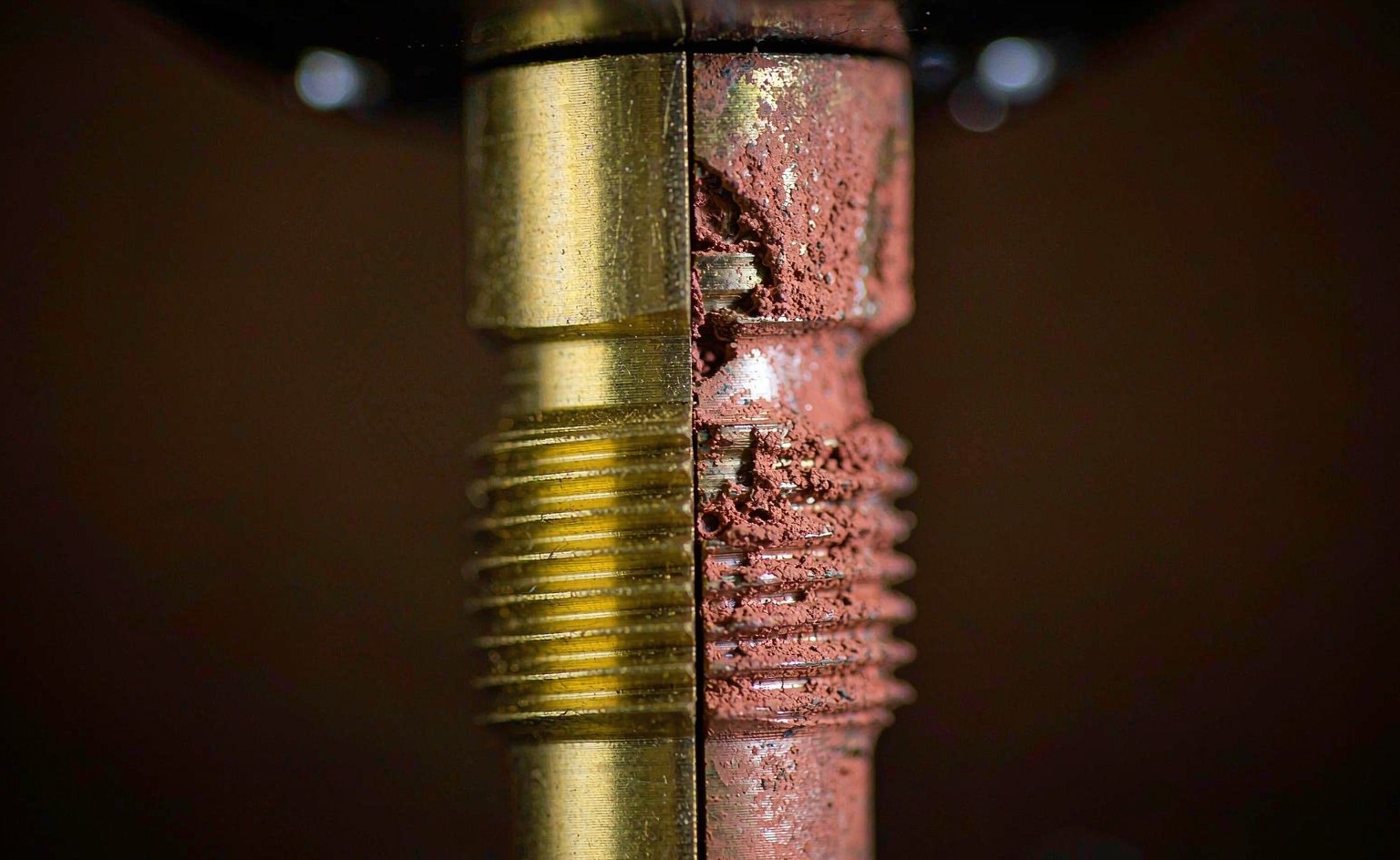
Three sectors that are unusually large in this region all carry chloride exposure: desalination, seawater cooling, and sour gas with sulphur recovery. In those services, brass wetted parts fail through dezincification — the zinc leaches selectively out of the alloy and leaves behind a porous, weak copper structure that still looks like a fitting from the outside. The failure looks sudden. It was not sudden; it was a long time arriving behind a wall that still looked intact.
For these services the specification moves to stainless steel. A 316L pressure gauge for chloride-bearing duty is not a premium option — it is the entry requirement, because the alternative is replacing instruments on a cycle. Where even 316L is marginal for the medium, a diaphragm seal takes the instrument out of contact with the process altogether and transmits pressure through an isolated fluid path. Both approaches cost more per unit than brass. Both cost less per year.
What to check: look at the failed instrument rather than the dial. Dezincification has a distinctive signature — the yellow of the brass has gone reddish or pinkish where copper is left behind. If you see that, the material specification is wrong for the service, and no change of accuracy class will fix it.
4. Vibration and mounting: the failure that isn’t the instrument’s fault
The fourth mechanism is the most avoidable and the most frequently missed, because it happens outside the instrument entirely.
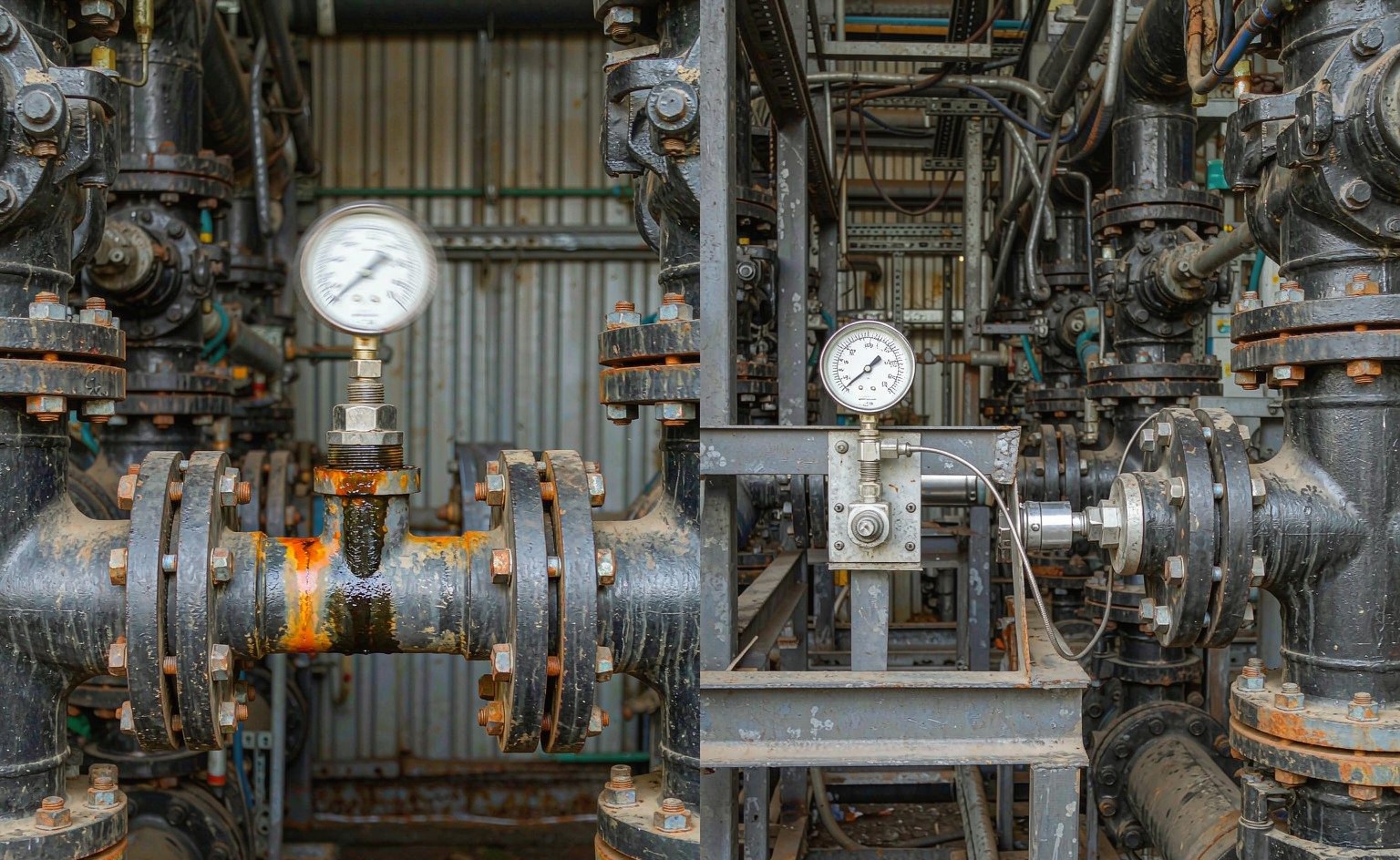
A gauge threaded directly into a line on a vibrating skid — a compressor package, a pump base, a diesel-driven unit — receives continuous mechanical input through its own process connection. That input walks the threaded joint loose, works the seal, and eventually produces a weep at the thread. It also accelerates everything above: fatigue from any pulsation already present, and pointer and movement wear from continuous motion.
The mitigation is usually a mounting change rather than an instrument change. A panel-mounted or surface-mounted bracket takes the mechanical load off the process connection. A short capillary or remote-mount arrangement moves the gauge off the vibrating structure altogether. Where neither is possible, a liquid-filled vibration-resistant design damps the symptom — but the mounting is still doing the real work, and skipping it means buying the same failure again in a nicer case.
What to check: walk your last five gauge failures. If the thread was loose when it came out, you have a vibration problem that no specification change alone will solve.
A short checklist before you specify the next one
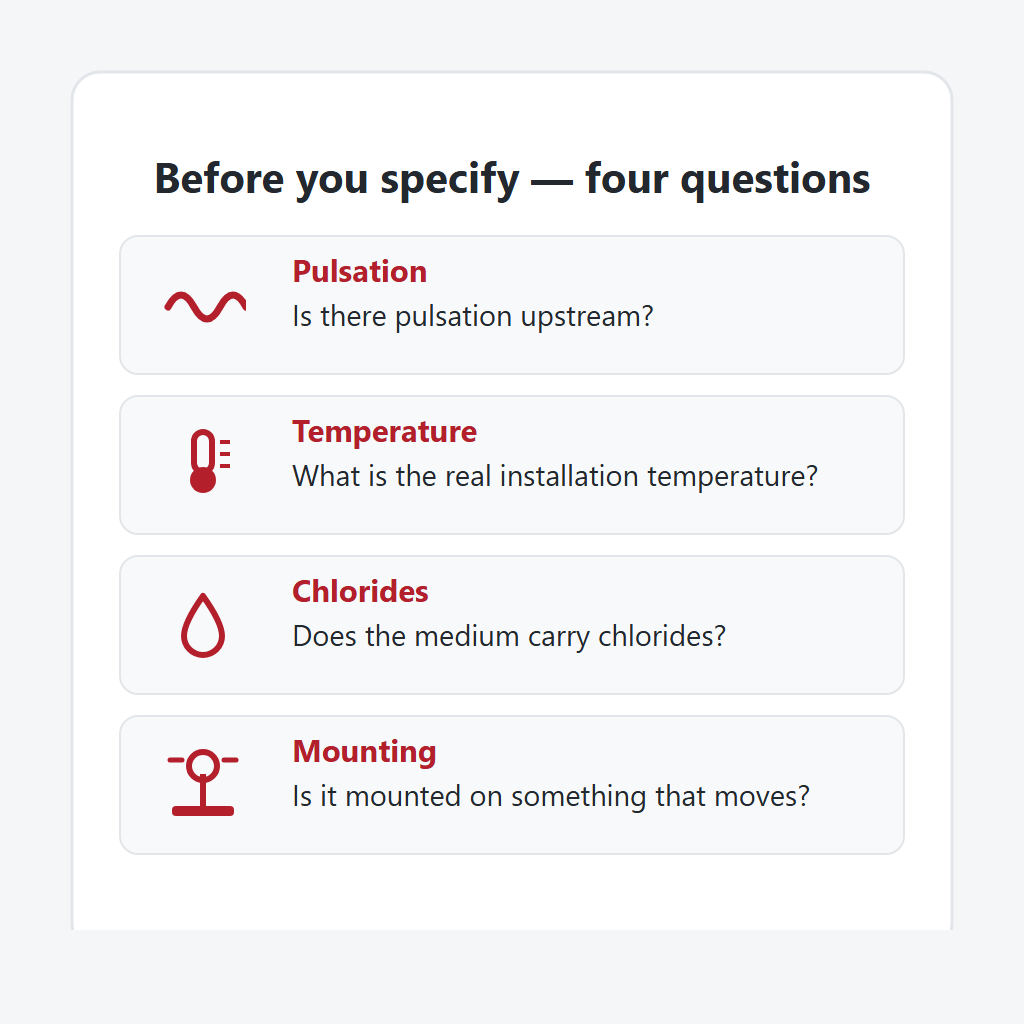
None of these four conditions is exotic, and none of them tends to appear on a standard purchase request. That is the whole problem: they are knowable before the order goes in, and they are usually discovered after installation instead. Four questions are worth asking per measuring point:
- Is there pulsation upstream? A reciprocating machine or a fast-cycling valve anywhere upstream changes the requirement.
- What is the real installation temperature? Not the process temperature — the ambient temperature around the case, including sun load and enclosure effects.
- What is the process medium, and does it carry chlorides? Seawater, brine, sulphur-bearing streams and many chemical services all do.
- Is the gauge mounted on something that moves?
Once those four are answered the specification largely writes itself. Damping answers the first, a fill and case construction rated for local temperature answers the second, 316L wetted parts or a diaphragm seal answers the third, and a mounting change answers the fourth. Accuracy sits on top of all of this — in practice much general plant duty lands in the middle of the available span rather than at either end, and accuracy classes from 0.25 to 2.5 cover that range.
Where we fit
We manufacture pressure gauges and sell factory-direct, including vibration-resistant designs and gauges with 316L wetted parts. Standard ranges run from a few kPa up to 100 MPa, accuracy classes are available from 0.25 to 2.5, OEM labeling is supported, and we work to 2-week dispatch.
That matters here for one specific reason. Most of the failures above get diagnosed after installation, when the replacement is already urgent and the specification has to change. Working directly with the manufacturer means those corrections can be quoted against the real duty and shipped quickly, which turns a specification mistake into a routine re-order rather than something that reaches a shutdown schedule.
If you have a measuring point that keeps eating gauges, describe those four conditions and we will tell you what we would build for it.
Ray Lin · Founder UpscaleGAUGE · raylin@upscalegauge.com · WhatsApp +86 156 0607 3241